Thermoforming: Shaping Curvy Grilles With No Supports
Summary
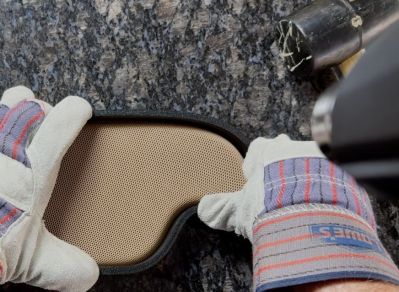
Hobbyists can enhance their 3D printing projects by incorporating thermoforming techniques, as demonstrated by Zion Brock. This method simplifies complex designs, allowing for efficient creation of detailed shapes, like a radio grille, with less printing time and material waste.
Key Insights
What is thermoforming and how does it differ from 3D printing?
Thermoforming is a manufacturing process that heats a sheet of plastic until it becomes pliable, then uses vacuum, pressure, or mechanical forces to shape it onto a mold. Unlike 3D printing, which builds parts layer-by-layer, thermoforming forms entire parts from a single plastic sheet in one operation. The key advantage for hobbyists is that thermoforming can create large, thin parts with consistent thickness and mechanical properties, while avoiding the need for support structures that 3D printing often requires. When combined, 3D printing is used to create the molds, and thermoforming then uses those molds to produce the final parts.
Why is thermoforming beneficial for creating complex shapes like curved grilles without supports?
Thermoforming eliminates the need for support structures because the plastic sheet is simply draped over a mold rather than built up layer-by-layer. This is particularly advantageous for complex, curved designs because 3D printing molds using technologies like Multi Jet Fusion can easily achieve intricate shapes, including undercuts, that would be expensive or impossible to machine. Once the 3D printed mold is created, the thermoforming process uses vacuum or pressure to conform the heated plastic sheet to the mold's contours, resulting in detailed parts with less material waste and reduced printing time compared to printing the final part directly.