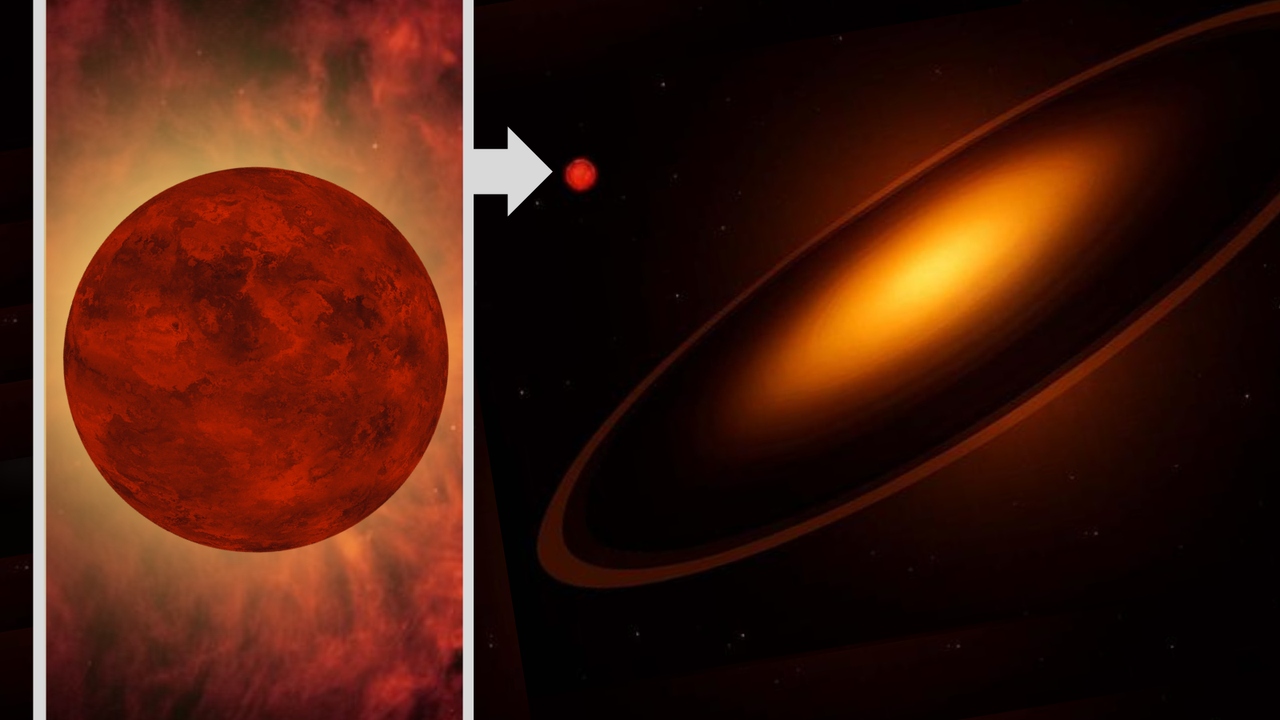
A mystery object is dimming a distant star. Could it be a massive exoplanet, or a 'failed star'?
Summary
A distant star experiences extreme dimming due to a mysterious object, sparking debate among scientists. Experts are divided on whether it is a 'failed star' brown dwarf or an exceptionally massive super-Jupiter exoplanet, raising intriguing questions about celestial phenomena.
Key Insights
What is a 'failed star' or brown dwarf?
A brown dwarf, often called a 'failed star,' is an object more massive than a planet but not massive enough to sustain hydrogen fusion like a true star, typically ranging from about 13 to 80 times the mass of Jupiter. One hypothesis for Tabby's Star dimming involves a transiting brown dwarf in an eccentric orbit.
Sources:
[1]
What is a super-Jupiter exoplanet?
A super-Jupiter is an exoplanet significantly more massive than Jupiter, potentially up to dozens of times its mass, blurring the line with brown dwarfs but not fusing deuterium. While debated for Tabby's Star, leading explanations favor circumstellar dust clouds causing wavelength-dependent dimming over planetary transits.