Software Development on the Nintendo Famicom in Family BASIC
Summary
In a recent video, [Throaty Mumbo] explores the Nintendo Famicom's HVC-007 Family BASIC package, showcasing its unique components and capabilities. This nostalgic look highlights a home computing experience that was exclusive to Japan, offering insights into retro coding.
Key Insights
What was Family BASIC and why was it significant for the Famicom?
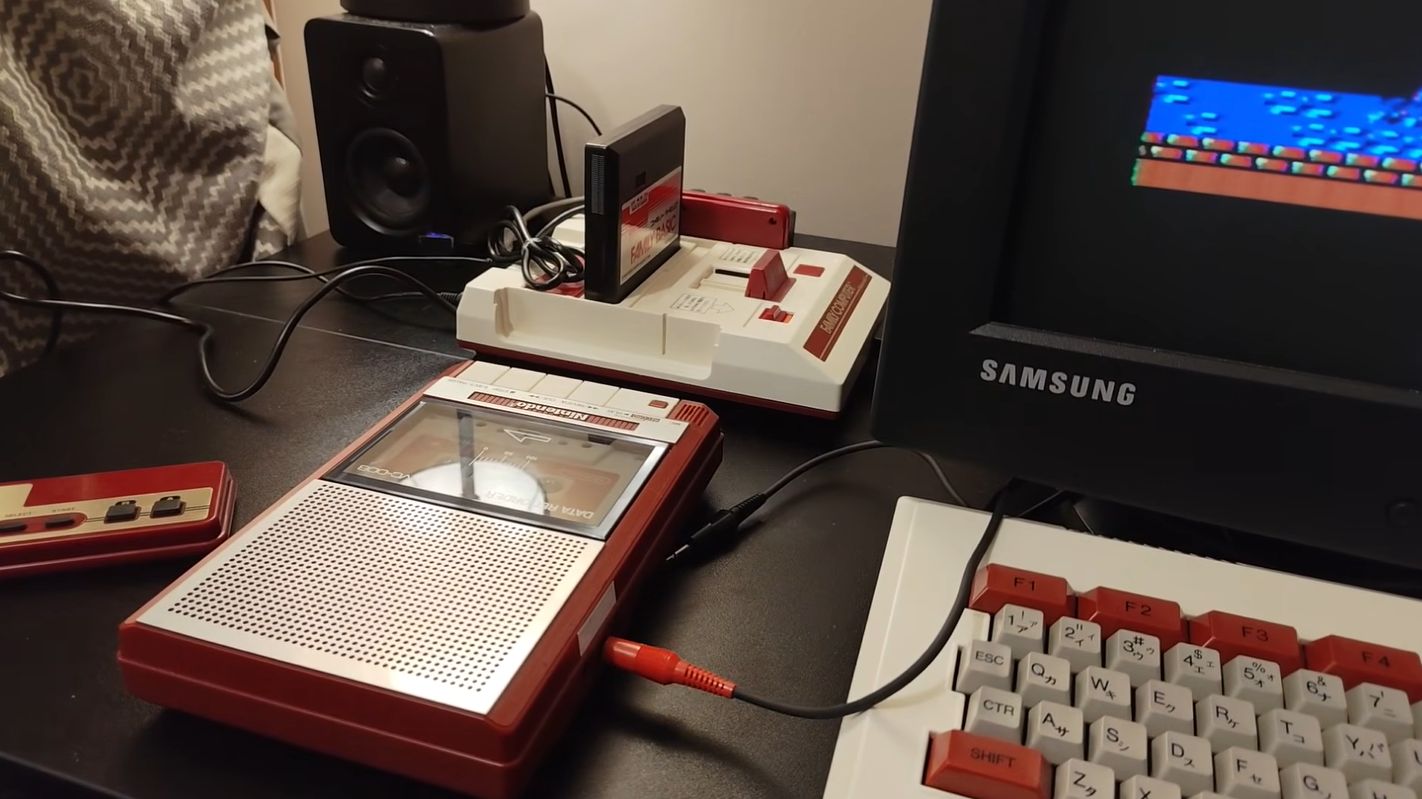
Family BASIC was a programming accessory for the Nintendo Famicom released in June 1984 as a collaboration between Nintendo, Hudson Soft, and Sharp Corporation. It allowed users to create their own programs and games using NS-HuBASIC, a BASIC dialect enhanced specifically for game development with support for sprites, animation, backgrounds, and musical sequences. This made the Famicom unique among home consoles by offering a consumer-accessible development environment, though it remained exclusive to Japan.
What hardware components were included with Family BASIC and how did they work together?
Family BASIC consisted of three main components: a cartridge containing the programming environment, a specialized keyboard that plugged into the Famicom's 15-pin expansion port, and an optional Famicom Data Recorder that connected to the keyboard for saving and loading programs via cassette tape. Users could type BASIC code directly using the keyboard, and programs could be saved to cassette tape or recorded as audio files using any standard audio recording device. The system required the keyboard to be attached to function properly.