Capacitor Memory Makes Homebrew Relay Computer Historically Plausible
Summary
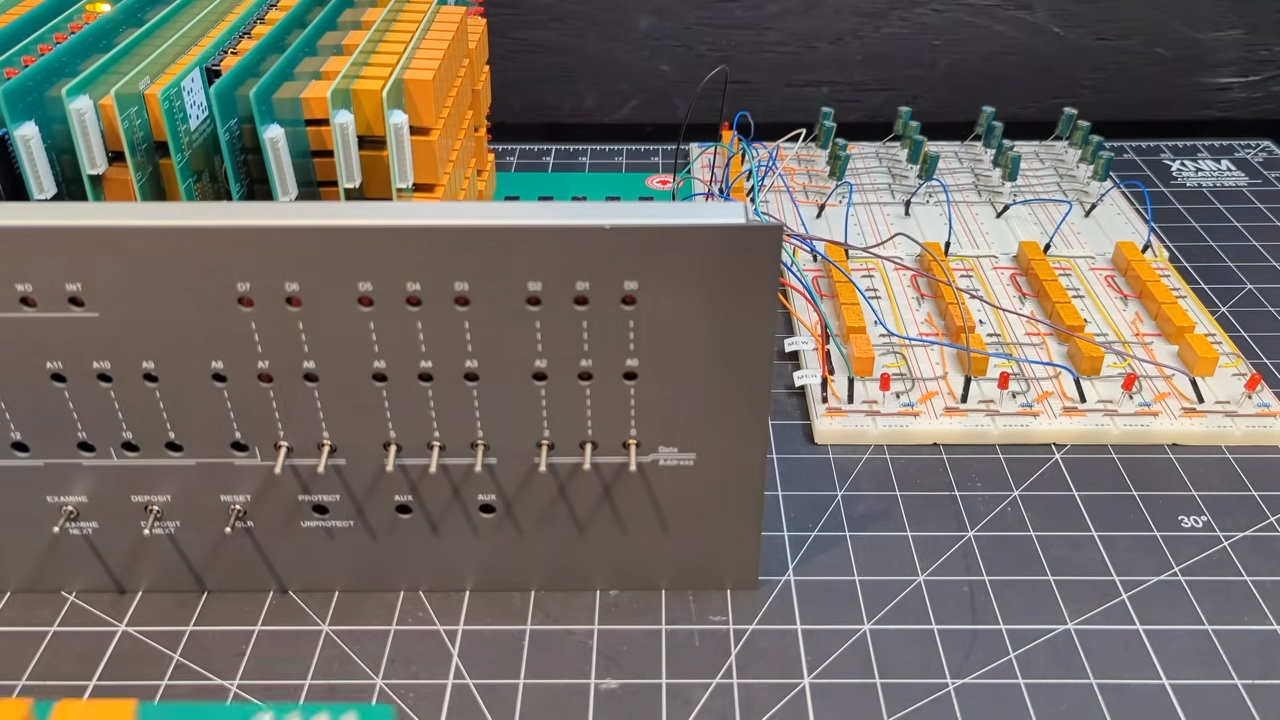
A recent video showcases [DiPDoT]'s innovative relay-based computer, now featuring capacitor-based memory. This design highlights historical computing methods while demonstrating a unique auto-clearing memory circuit, blending retro technology with modern enhancements for an engaging experience.
Key Insights
What is capacitor-based memory in a relay computer?
Capacitor-based memory stores bits using the charge state of capacitors: a charged capacitor represents a '1' and a discharged one a '0'. Each capacitor holds enough charge to briefly energize a relay during read operations, mimicking 1940s historical designs like TIM-8.
Why is capacitor memory destructive and how is it managed?
Reading depletes the capacitor's charge, making it destructive as it cannot be read repeatedly without refresh. Circuits recharge the capacitor during write operations or use explicit clear functions to discharge it, with refresh mechanisms to restore the state after reading.