Your Surround Sound is being limited by this ancient cable
Summary
Using outdated TOSLINK cables to connect modern Dolby Atmos soundbars and OLED TVs can severely limit audio performance. The publication highlights the importance of upgrading to contemporary connections for an enhanced surround sound experience.
Key Insights
Why can't TOSLINK optical cables support lossless surround sound like Dolby Atmos?
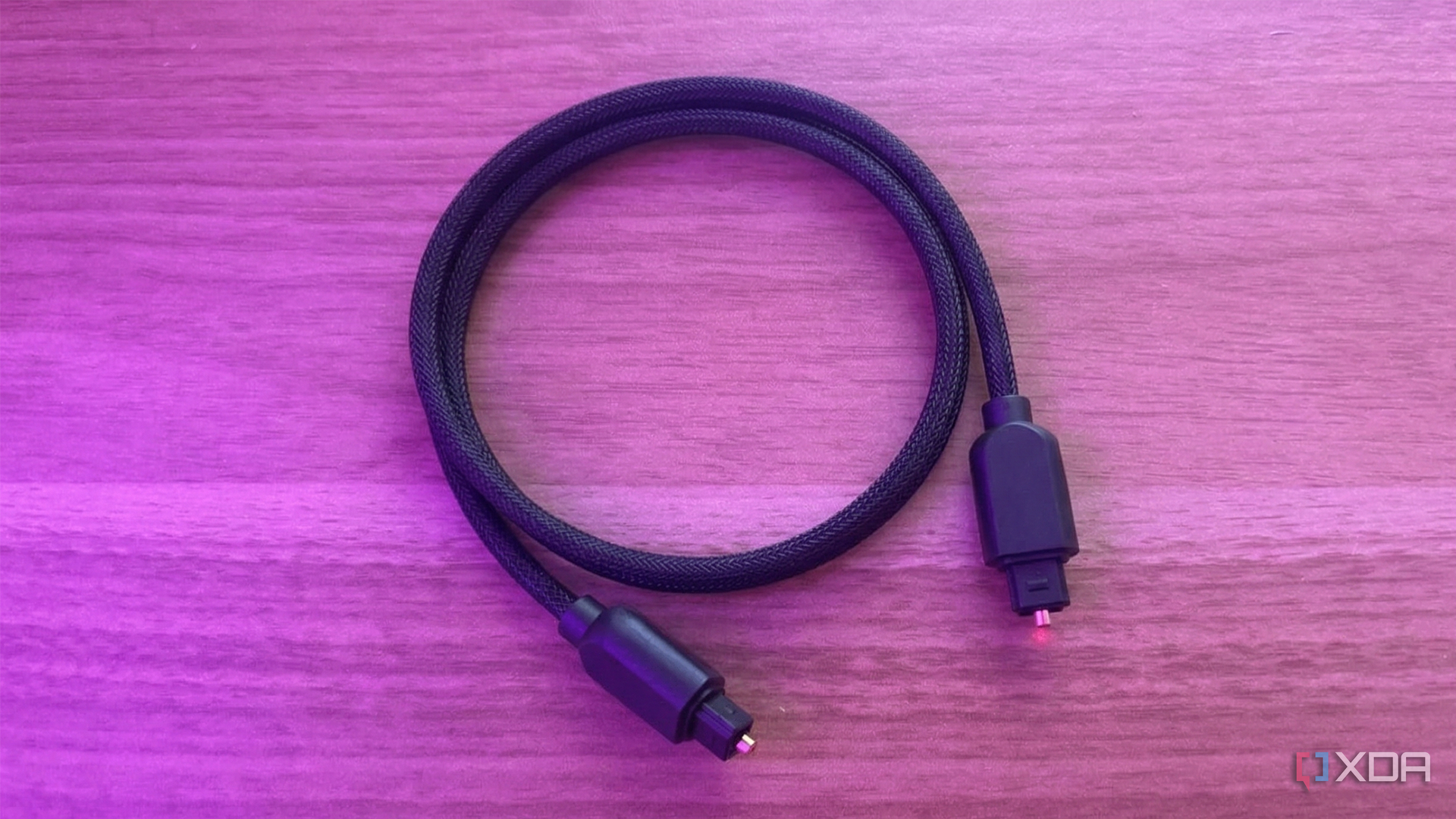
TOSLINK optical cables have a maximum bandwidth of roughly 384Kbps to 1.5 Mbps, which is insufficient to transmit lossless audio for more than two channels. This bandwidth limitation means that surround sound signals must be compressed rather than sent losslessly. While you can still receive surround sound through TOSLINK, it will be in a compressed, lossy format such as Dolby Digital or DTS, rather than high-fidelity lossless formats like Dolby Atmos or DTS-HD. This compression results in reduced audio quality and prevents you from experiencing true high-definition surround sound.
What is the best alternative to TOSLINK cables for connecting modern soundbars and TVs?
HDMI is the recommended alternative to TOSLINK optical cables for modern home theater setups. Unlike TOSLINK, HDMI can transmit both audio and video data through a single connection and supports the full bandwidth required for lossless, high-definition audio formats including Dolby Atmos and DTS-HD. If your soundbar or receiver has an HDMI input or ARC (Audio Return Channel) port, upgrading to HDMI will provide significantly better audio quality than TOSLINK, especially for systems with more than two speakers.